
Vertical CNC Milling
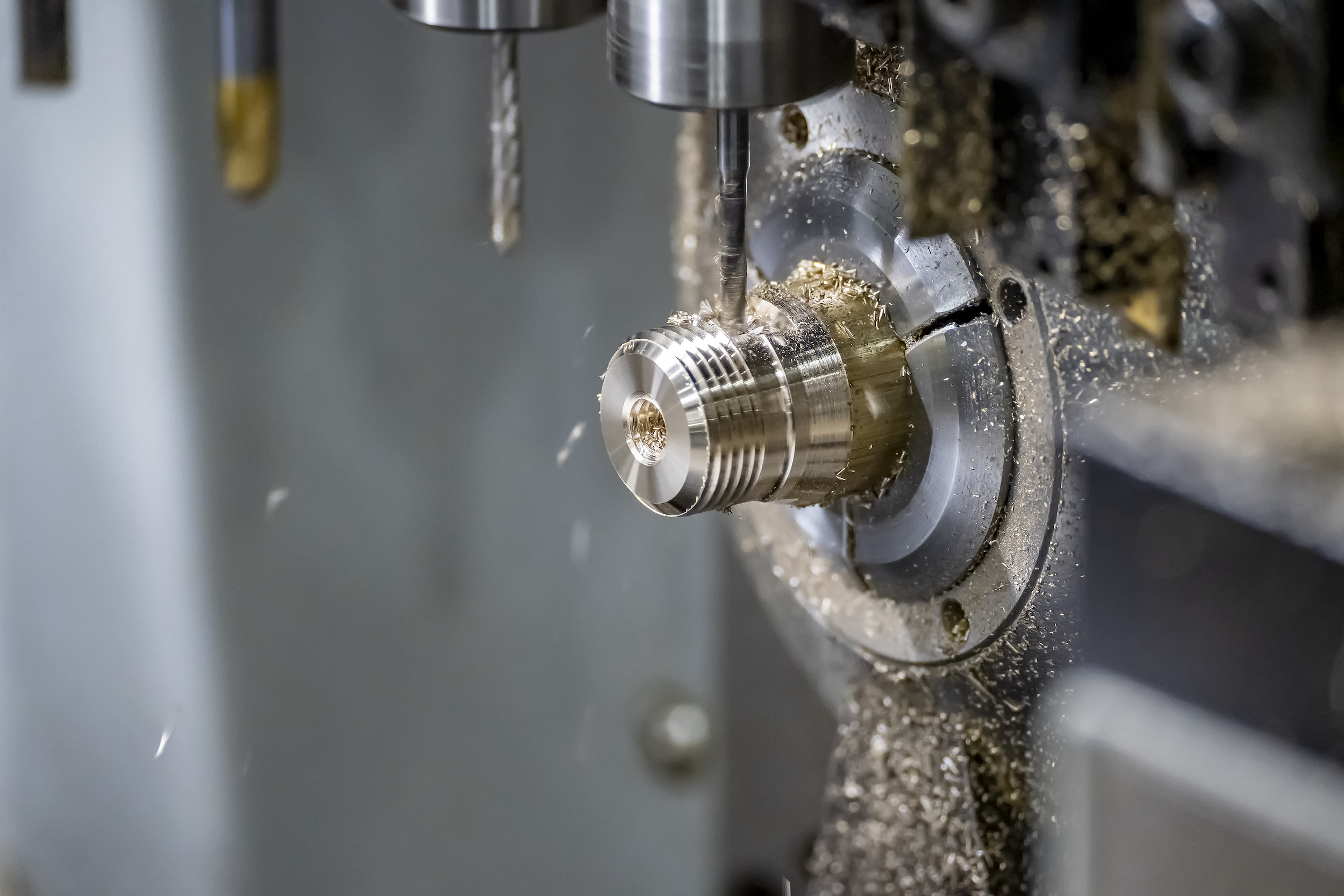
Resolute Precision Manufacturing's vertical CNC milling department offers 3, 4, and 5-axis machining capability with a work envelope up to 20 by 50 inches. From standard prismatic parts to complex compound-angle geometry, our vertical machining centers produce precision milled components in steel, stainless, aluminum, brass, bronze, and engineering plastics — direct to OEM manufacturers across the Midwest. Request a QuoteThree Levels of Complexity
Our vertical milling department operates machines across three axis configurations, allowing us to match the right machine to your part’s complexity. Three-axis milling handles the majority of prismatic part requirements efficiently and cost-effectively. Four-axis adds rotational capability for parts requiring features at different angular positions. Five-axis simultaneous machining addresses compound-angle features, undercuts, and complex surface profiles that cannot be reached in fewer axes.
Having all three configurations means we quote the right machine for your part not the only machine we have. This directly impacts your cost, quality, and lead time.
Our Services
Robotic Automation for Production Volume
Select vertical milling cells are equipped with robotic loaders that automate part loading and unloading between machine cycles. For high-volume prismatic parts with consistent geometry, robotic loading extends production into unattended overnight and weekend shifts. This delivers the throughput and consistency that production milling programs require without proportional increases in labor cost.
Specifications
| 3-Axis Milling | Standard X, Y, Z motion; prismatic parts, pockets, profiles, drilling, tapping |
| 4-Axis Milling | A or B-axis rotation added; features at multiple angular positions without re-fixturing |
| 5-Axis Milling | Simultaneous 5-axis; compound angles, undercuts, complex surfaces in one setup |
| Work Envelope | Up to 20″ × 50″ on vertical machining centers |
| Tooling | CAT40 — wide range of roughing and finishing tools |
| Robotic Automation | Available on select cells for high-volume production |
| Standard Tolerance | ±0.001″ — tighter available on request |
| Metals | Steel, stainless steel, alloy steel, aluminum, brass, bronze, copper, titanium |
| Plastics | Delrin, PEEK, nylon, polycarbonate, HDPE, PTFE, ABS, PVC |
Typical Vertically Milled Parts
Our vertical machining centers produce a broad range of precision milled components across multiple industries:
Housings and enclosures for hydraulic, pneumatic, and industrial equipment
Brackets, plates, and structural components for industrial machinery
Medical device fixtures, instrument bodies, and implant tooling
Aerospace structural components with compound-angle features
Automotive brackets, sensor housings, and sub-assembly components
Custom tooling plates and precision fixtures for production use
Frequently Asked Questions
What is the maximum part size RPM can mill on a vertical machining center?
Our vertical machining centers accommodate parts up to 20″ × 50″ on the table. Part height is limited by the Z-axis travel. Contact us with your drawing for an assessment of oversized parts.
When should I use vertical milling versus horizontal milling?
Vertical milling is ideal for flat parts, pockets, profiles, and parts requiring machining on one or two faces. Horizontal milling with a rotary table is preferred for heavy workpieces, castings, and parts requiring machining on four or more faces in a single setup.
Does RPM offer 5-axis milling for prototype quantities?
Yes. We produce 5-axis milled prototypes from single pieces upward. The same machines and setups used for prototype scale directly to production, eliminating re-qualification when your program moves to volume.
What tolerances does RPM hold on vertically milled parts?
We hold ±0.001″ as a standard tolerance on vertical milled parts. Tighter tolerances are achievable depending on part geometry, material, and feature requirements contact us with your drawing for a detailed assessment.