
Y-Axis CNC Lathe Services
Resolute Precision Manufacturing's Y-axis dual spindle CNC lathes add off-center milling capability and automatic sub-spindle transfer to conventional CNC turning enabling the complete machining of complex parts with both turning and milling features in a single uninterrupted cycle. Eliminate secondary operations, reduce lead time, and improve accuracy on your most demanding turned components. Request a QuoteWhat the Y-Axis Adds to CNC Turning
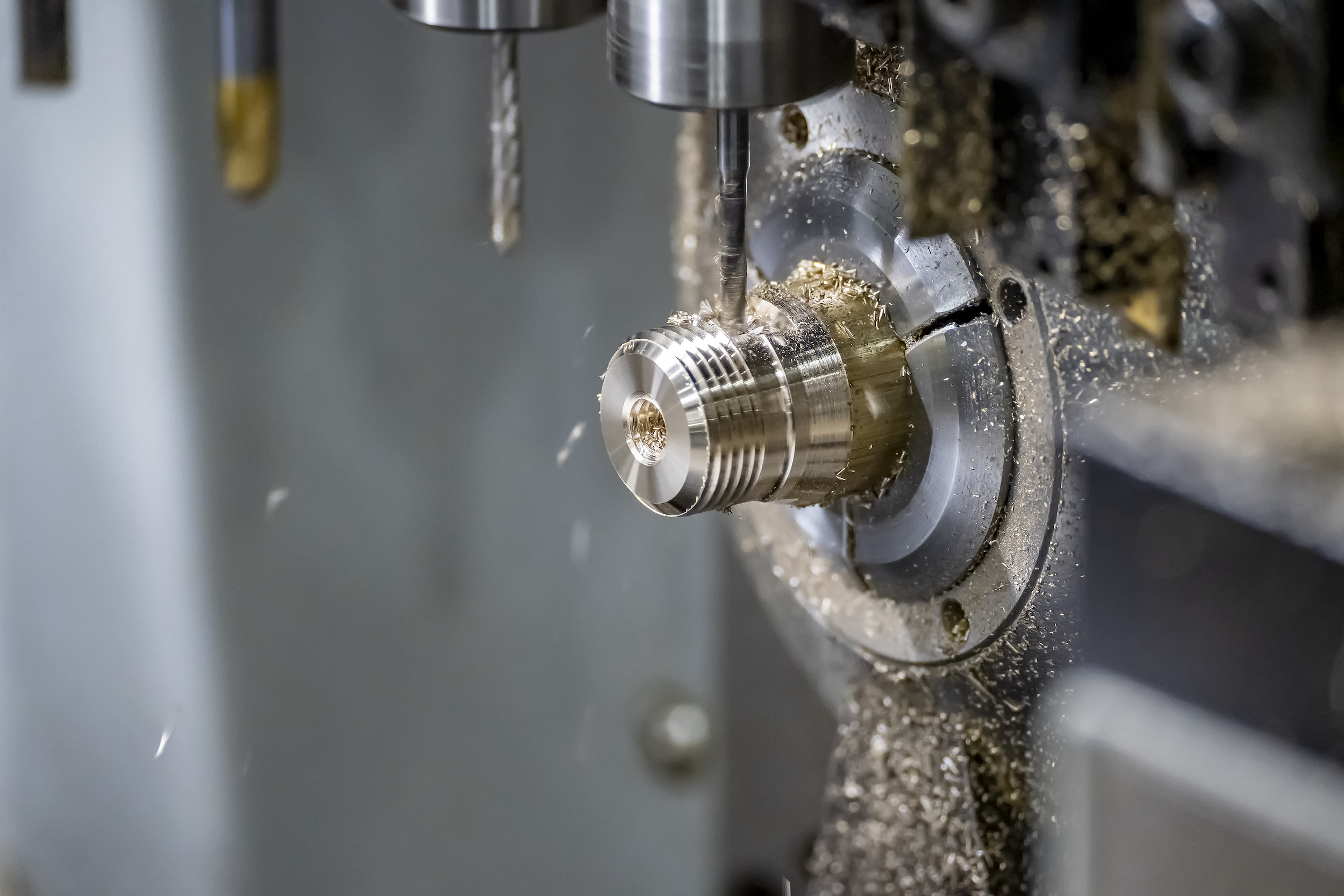
A standard CNC lathe moves only in X and Z radially and axially around the rotating workpiece. The Y-axis adds a third linear movement allowing the cutting tool to travel off centerline. This unlocks a different range of features: eccentric bores not on the part centerline, off-center flats and slots, keyways at any clock angle, and milled pockets impossible without the Y movement.
Combined with a sub-spindle that grips the part from the opposite end, the Y-axis lathe completes all turning, grooving, threading, cross-drilling, and milling operations on both the front and back faces of the part in one machine, one program, and one uninterrupted cycle.
Our Services
The Business Case for Dual Spindle Turning
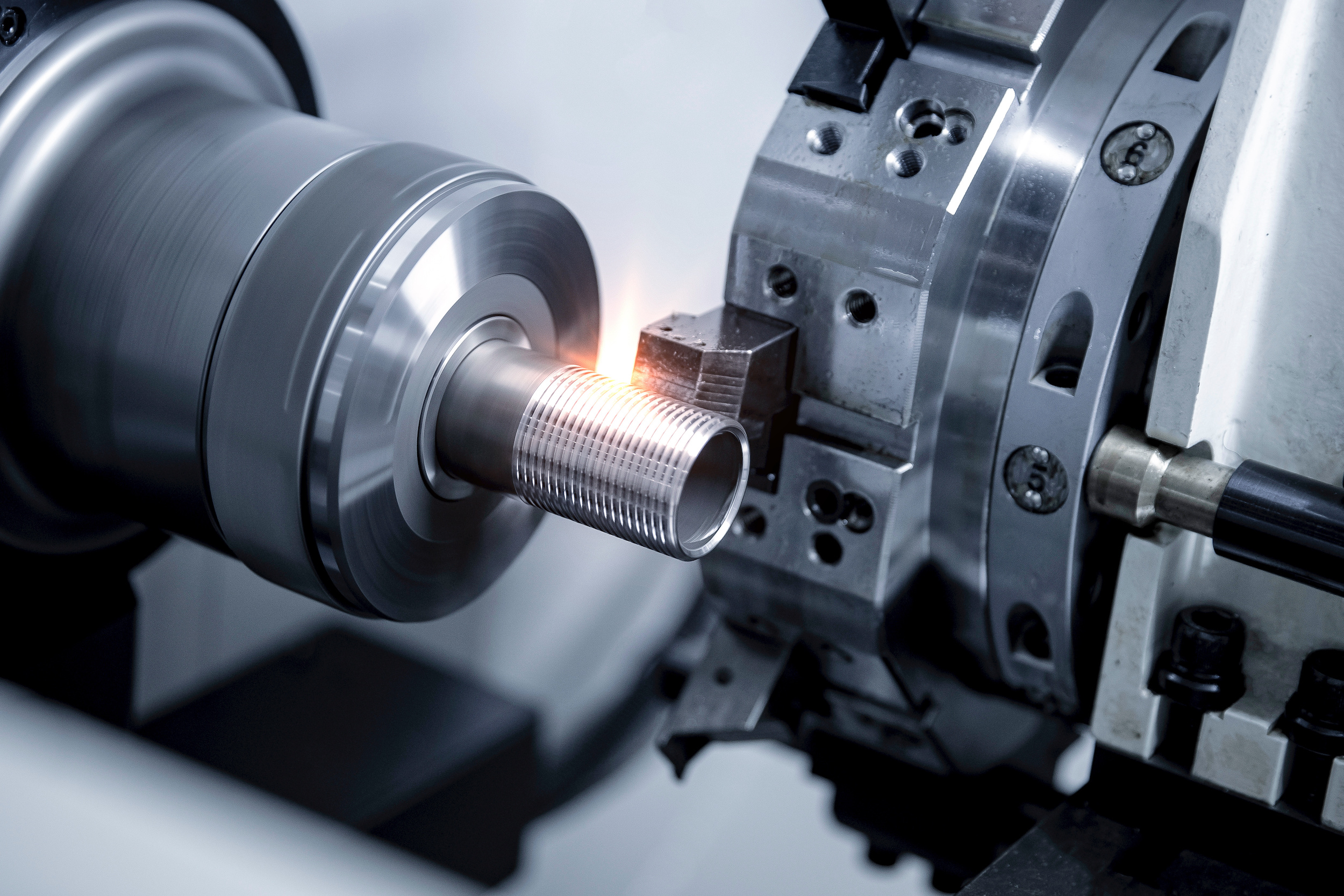
Every time a part moves between setups from lathe to mill, from front face to back face there is an opportunity for dimensional variation, handling damage, and queue time to accumulate. A part requiring four separate setups on four machines has four opportunities to go out of tolerance before inspection.
Y-axis dual spindle turning eliminates these transitions. Your part goes in as bar stock and comes out as a finished component, with all features referenced from a single datum. For parts with tight positional tolerances between turned and milled features, or between features on opposite ends, this is often the only reliable way to hold drawing requirements in production.
Specifications
| Y-Axis | Off-center milling — eccentric bores, off-center flats, keyways, milled pockets |
| Dual Spindle | Main and sub-spindle; automatic part transfer without manual re-chuck |
| Live Tooling | Full driven tool capability — cross-holes, flats, milled features, threading |
| Deep-Hole Drilling | Up to 5–8× diameter available with live tooling |
| Bar Capacity | Up to 3.2″ diameter bar stock |
| Materials | All standard industrial metals and engineering plastics |
| Production Volume | 1 prototype to 500,000+ parts per year |
| Certifications | ISO 9001:2015 |
Parts Best Suited for Y-Axis Dual Spindle Turning
Y-axis turning excels at the following part families:
Hydraulic valve spools and bodies cross-drilled ports at precise clock positions and milled flats
Medical device components precision features on both ends requiring high positional accuracy
Custom fasteners with drive features hex, Torx, slotted, spline profiles milled from bar
Connector and fitting bodies turned OD and ID with off-center bores and milled faces
Automotive and aerospace components compound features requiring turning plus milling in one cycle
Frequently Asked Questions
What is the accuracy advantage of Y-axis turning over separate turning and milling?
When a part is machined in one setup, all features reference a single datum. Moving between setups introduces re-referencing error typically 0.002″ to 0.005″ that directly impacts positional accuracy between features. Single-setup Y-axis turning eliminates this error source.
Can Y-axis lathes produce parts with off-center bores?
Yes. The Y-axis enables drilling and boring of holes at any offset from the part centerline used for cross-ports in hydraulic valve bodies, eccentric pin holes, and off-center bores in custom fittings.
What is the cycle time comparison between Y-axis turning and separate operations?
A part requiring turning, milling, drilling, and back-end operations on four machines may take several days through queue and setup. The same part on a Y-axis dual spindle machine is complete in a single 2 to 4 minute machine cycle with no inter-operation queue.
Does RPM offer Y-axis turning for prototype quantities?
Yes. We produce Y-axis turned prototypes from single pieces upward. The same machines and programs scale directly to production, ensuring dimensional consistency from prototype approval through full production release.