
2-Axis CNC Lathe Services
Resolute Precision Manufacturing's 2-axis CNC lathe cells are configured for high-volume, high-efficiency production of cylindrical components. With automatic bar feeders and robotic loading, and bar stock capacity to 3.2 inches diameter, our 2-axis turning cells run production quantities from hundreds to hundreds of thousands of parts with consistent quality and competitive per-part pricing. Request a QuoteEfficient Production for Round Symmetrical Parts
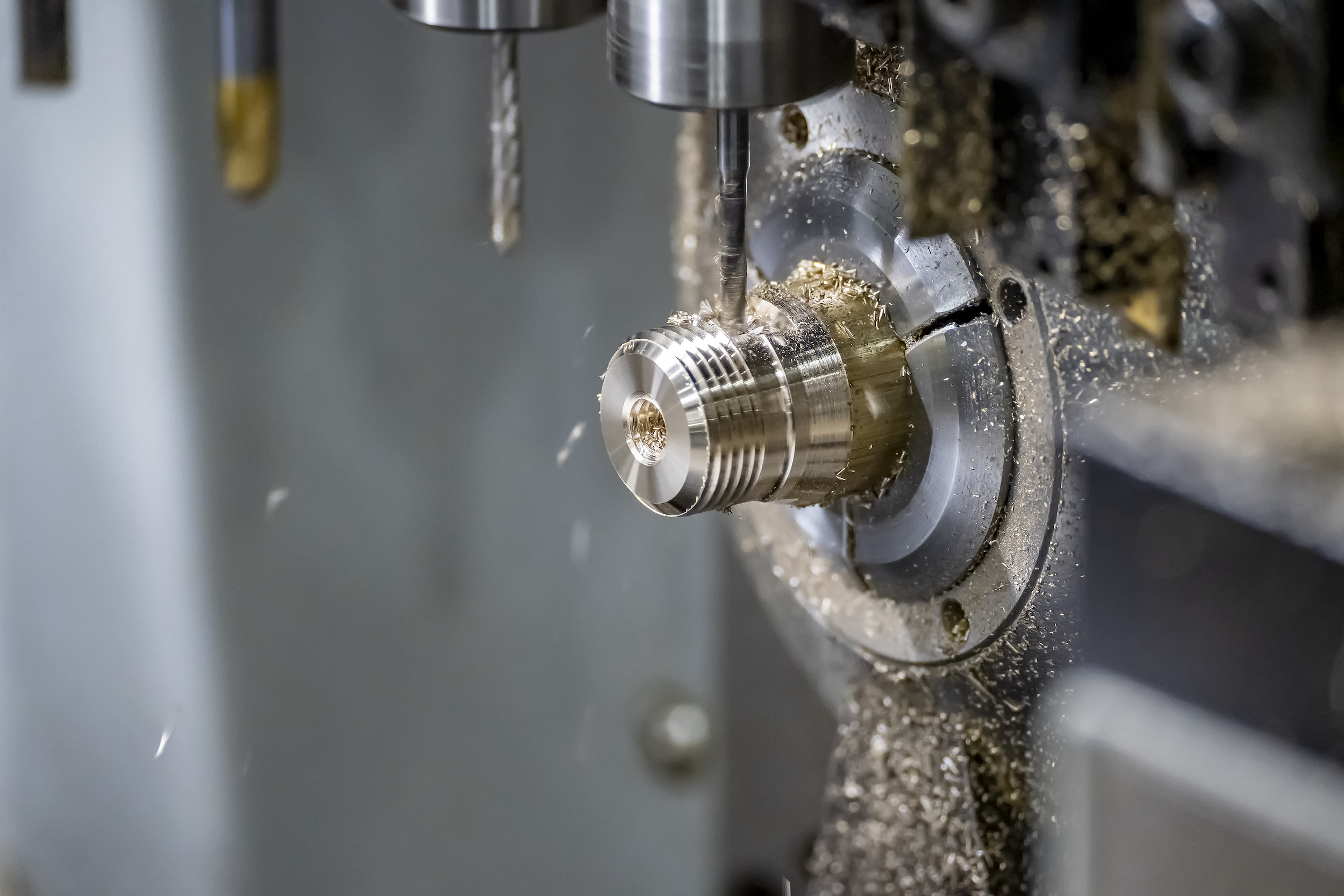
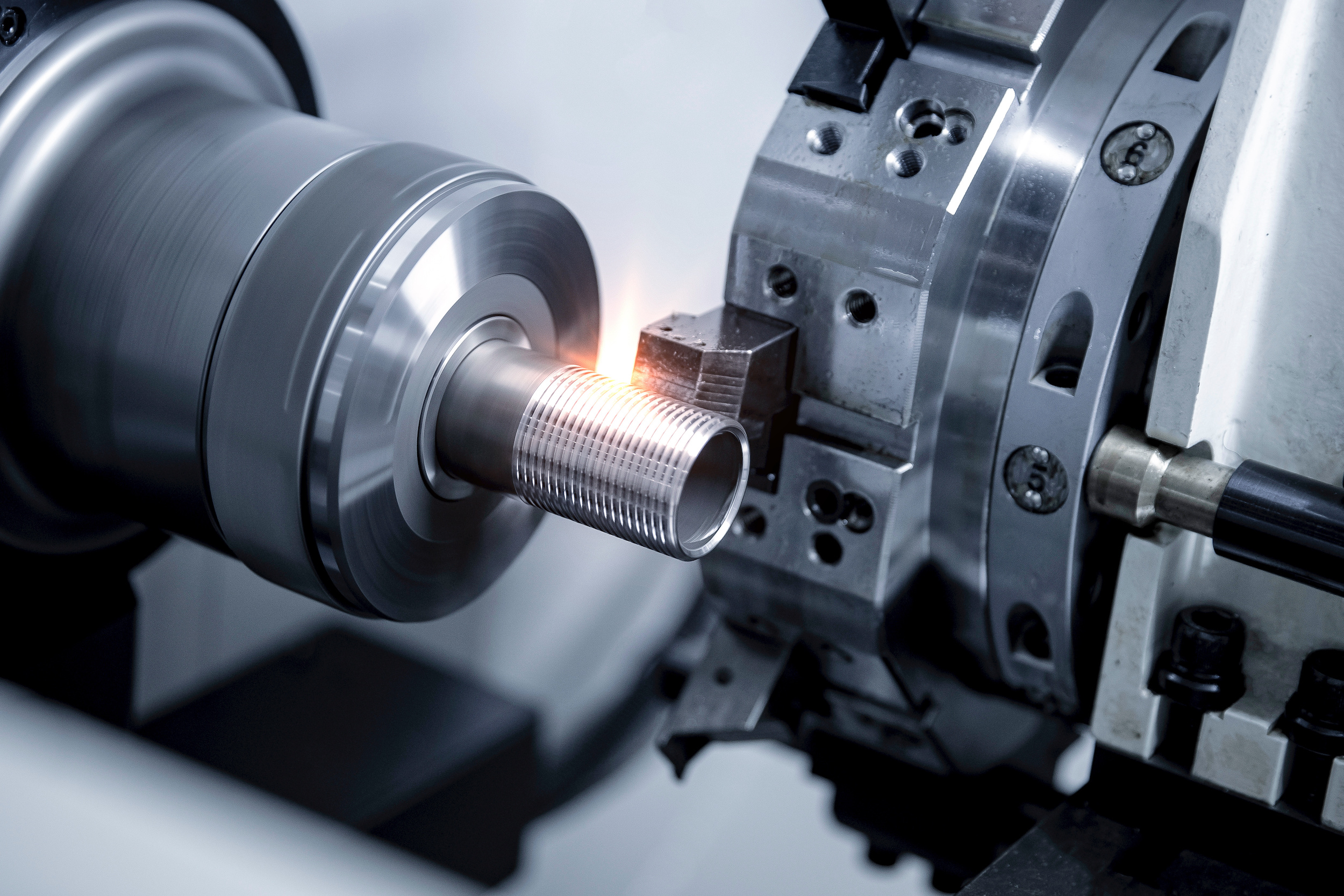
A 2-axis CNC lathe moves the cutting tool in the X-axis (radial) and Z-axis (axial) to produce all fundamental cylindrical features: OD turning, facing, boring, internal and external threading, grooving, chamfering, and parting. For parts that are symmetrical about their center axis with no off-axis features, 2-axis turning is the most efficient and cost-effective machining method available.
Our bar-fed 2-axis cells eliminate the manual blank loading required by chucking machines. Bar stock feeds automatically, the program runs, and the finished part drops off. This automation enables high spindle utilization, consistent cycle times, and production runs that extend into unattended overnight and weekend shifts.
Our Services
Bar-Fed and Robotic Loading
All 2-axis lathe cells are equipped with automatic bar feeders accepting bar stock from 3/8 inch to 3.2 inches in diameter and up to 12 feet long. On select cells, robotic loading supplements bar feeding for bin-loaded blanks, castings, or forgings not available in bar form. These automation systems keep our turning cells running at maximum efficiency with minimal operator intervention.
Specifications
| Bar Stock Diameter | 3/8″ to 3.2″ diameter |
| Bar Stock Length | Up to 12′ (3.66m) |
| Turning Operations | OD turning, facing, boring, threading (internal/external), grooving, chamfering, parting, knurling |
| Thread Types | Unified (UN), metric (M), pipe (NPT/BSPP/BSPT), Acme, custom profiles |
| Automation | Automatic bar feeders; robotic loading on select cells |
| Production Range | 500 to 500,000+ parts per year |
| Metals | All standard industrial metals |
| Plastics | Delrin, PEEK, nylon, HDPE, PTFE, polycarbonate, ABS, PVC |
| Certifications | ISO 9001:2015 |
Ideal Parts for 2-Axis CNC Turning
- High-volume fastener blanks — screws, bolts, studs, threaded rods
- Shafts and axles — cylindrical profiles with diameter steps and undercuts
- Bushings and sleeves — ID/OD turned and bored components
- Spacers and standoffs — precision length and diameter parts
- Threaded fittings — external and internal threaded components without milled features
- Pins and dowels — precision diameter and length turned parts
Frequently Asked Questions
Is 2-axis turning appropriate for threaded parts?
Yes. Threading is one of the most common 2-axis turning operations. We produce internal and external threads in all standard forms — Unified, metric, pipe, Acme — plus custom thread profiles to drawing specifications
What is the difference between 2-axis and live tooling turning?
A 2-axis lathe moves in X and Z only, producing round symmetrical features. Live tooling adds driven rotary tools that perform milling and drilling off the part centerline. If your part needs cross-holes, flats, or keyways, it belongs on a live tooling lathe, not a 2-axis machine.
How does RPM price high-volume 2-axis turned parts?
Pricing depends on part size, material, complexity, and volume. Setup cost is amortized over the production run — per-part cost decreases significantly at higher volumes. Send us a print and annual volume forecast for an accurate quote.
Can RPM knurl parts on a 2-axis lathe?
Yes. We produce straight, diagonal, and diamond knurling on our 2-axis turning centers. Knurled surfaces are commonly specified on thumb screws, adjustment knobs, tool handles, and slip-resistant sleeves.