
Prototype Machined Parts
Resolute Precision Manufacturing (RPM) provides prototype CNC services and precision prototype machining for engineers, designers, and OEMs. As a production-capable prototype machine shop, we produce CNC prototype parts and prototype turned parts from CAD files or dimensioned drawings using production-grade materials. We respond to quote requests within 24 hours, with typical lead times of one to three weeks, depending on complexity and material availability. Request a QuoteWhy Prototype With a Production Shop?
Prototyping with a production-capable machine shop helps ensure your parts are designed with manufacturing requirements in mind. At RPM, prototypes are machined from production-grade materials on production CNC equipment. Engineers can evaluate dimensional accuracy, surface finish, and functional performance before moving into full production.
Unlike prototype-only methods, CNC machining produces parts directly from engineering-grade metals and closely reflects the processes intended for production. That makes CNC prototype parts a practical choice for:
- Design validation: confirming form, fit, and dimensions against your drawing.
- Functional testing: evaluating how the part performs in the material you plan to use.
- Manufacturability feedback: identifying tolerance, feature, or material challenges early, while the design can still change easily.
Working with a partner that offers precision prototype machining and production under one roof means the lessons from your prototype carry forward instead of being lost at a supplier handoff.
Fast Turnaround and Prototype CNC Capabilities
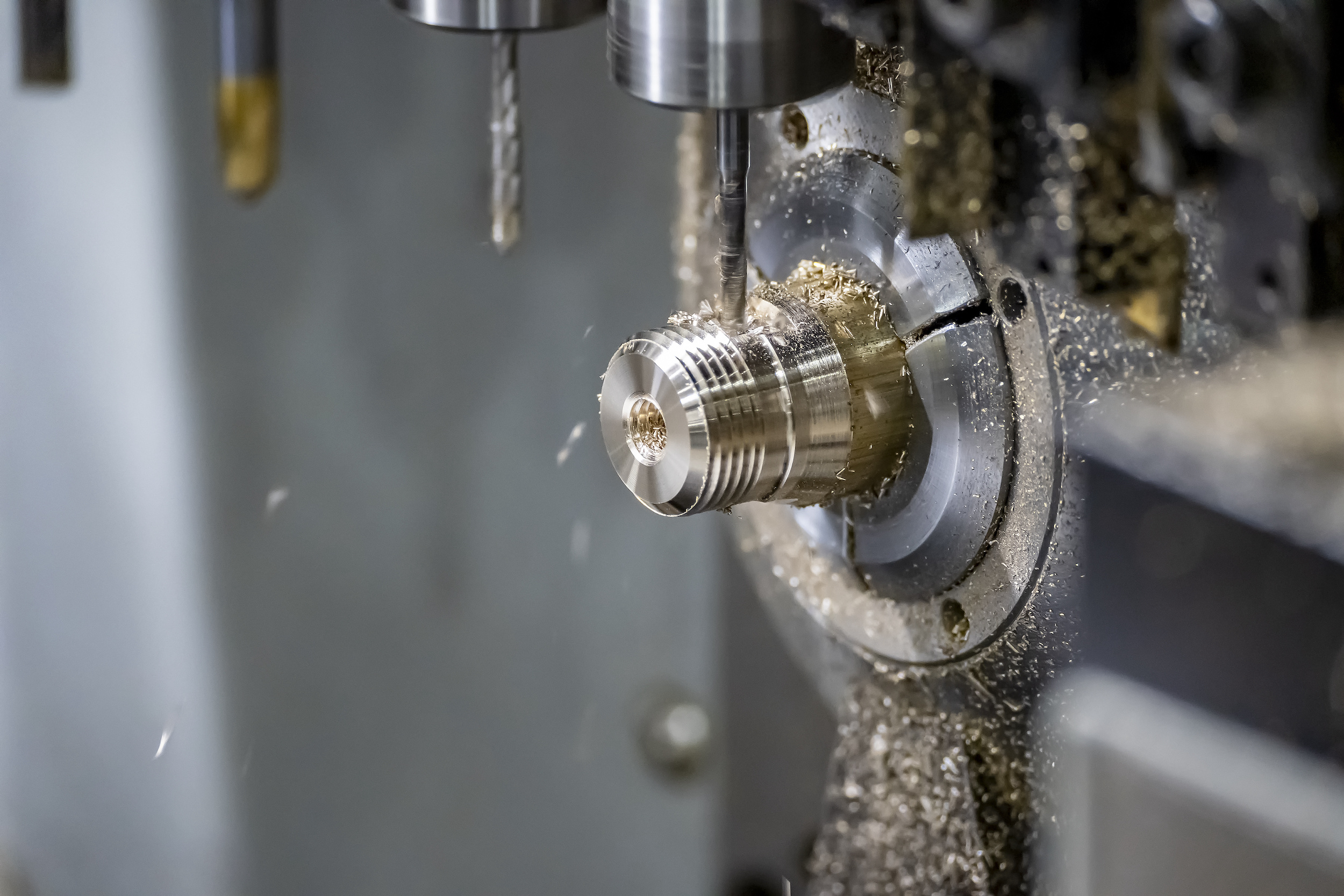
Our prototype CNC services run on the same types of bar-fed lathes, Swiss CNC machines, and vertical machining centers used for production runs. Dedicated scheduling capacity helps us accommodate prototype and short-run orders, with typical lead times of one to three weeks for many turned and milled components.
Prototype CNC Turning and Prototype Turned Parts
Prototype CNC turning at RPM covers Swiss CNC work (20mm–38mm), bar-fed lathes up to 3.2″ in diameter, and chucked parts up to 25.5″ in diameter. That range supports prototype turned parts from small precision components to larger chucked parts, in single pieces or short runs.
Prototype Milling and Multi-Axis Machining
For milled housings and other prismatic components, RPM offers 3-, 4-, and 5-axis vertical milling with a work envelope up to 20″ × 50″. Programs that need both turned components and milled parts can be handled in one facility, which reduces supplier handoffs and simplifies scheduling.
Prototype CNC Services for Single-Piece and Short-Run Orders
RPM accepts single-piece and short-run prototype orders with no minimum quantity. Whether you need one part for a design review or a small batch for functional testing, we can quote prototype CNC machining parts to your drawing and keep production requirements in view from the start.
Materials, Design Requirements, and Manufacturing Considerations
Material Selection
We machine prototypes from production-grade bar stock and plate available in prototype quantities. Available metals include steel, stainless steel, alloy steel, brass, aluminum, copper, bronze, titanium, and zinc. Whenever possible, specify the material you intend to use in production. That way CNC prototype parts give you test results that carry over to the production component.
Drawing and File Requirements
For the most accurate quote, send a dimensioned 2D drawing (PDF, DXF, or DWG) along with a 3D model (STEP or IGES) if you have one. Helpful details include:
- Material and grade
- Quantity
- Critical dimensions and tolerances
- Surface finish and any coating or finishing requirements
- Intended application or mating components, if you can share them
Tolerances and Manufacturability
Precision prototype machining for metal components with demanding dimensional requirements starts with a clear drawing. Tolerances affect cost and lead time, so call out the features that drive fit and function rather than tightening the entire part. Thin walls, deep pockets, and long, slender turned features can add machining complexity. A drawing review before cutting begins helps surface these issues early.
How to Choose a Prototype Machine Shop
When comparing a prototype machine shop, consider:
- Equipment range: do the shop’s turning and milling capacities match your part size and geometry?
- Quality system: is the shop certified? RPM is ISO 9001:2015 certified.
- Quote speed and clarity: how quickly will you hear back, and what information do they need?
- Engineering feedback: will they review your drawing for manufacturability?
- Production path: can the shop continue with you after the prototype is approved?
Specifications
| Minimum Quantity | 1 piece — no minimum order |
| Quote Turnaround | 24 hours from receipt of dimensioned drawing or CAD file |
| Typical Lead Time | 1 to 3 weeks depending on complexity and material |
| Turning Capability | Swiss CNC (20mm–38mm); bar-fed lathes up to 3.2″ diameter; chucked parts up to 25.5″ diameter |
| Milling Capability | 3, 4, and 5-axis vertical milling; work envelope up to 20″ × 50″ |
| Material Availability | Production-grade bar stock and plate available in prototype quantities |
| File Formats | 2D PDF drawings, DXF, DWG, STEP, IGES |
| Metals | Steel, stainless steel, alloy steel, brass, aluminum, copper, bronze, titanium, zinc |
| Certifications | ISO 9001:2015 |
Prototype to Production — Seamless Scaling
Once your prototype is approved, RPM can help you transition into bridge production and full-scale manufacturing. Keeping one machining partner from first article through production offers practical benefits:
- Fewer supplier handoffs, which reduces re-quoting and re-explaining your drawing at each stage.
- Retained process knowledge: what we learn about your part’s material, features, and tolerances during prototyping informs production planning.
- A consistent quality system across every phase under our ISO 9001:2015 certification.
Phase 1: Prototype Machining (1–25 Parts) Produce initial parts for design validation, dimensional inspection, fit testing, and functional evaluation.
Phase 2: Bridge Production Continue with approved parts in intermediate quantities while you finalize demand, assembly, or launch plans, using the same machining processes proven during prototyping.
Phase 3: Full Production (1,000+ Parts) Scale approved components into production quantities using established machining processes and quality controls.
Each phase is supported by our precision machining capabilities and production-focused approach, with process continuity maintained wherever applicable.
Frequently Asked Questions
Can RPM produce prototypes from my 3D CAD file?
Yes. We accept STEP and IGES 3D CAD files and work from them alongside a dimensioned 2D drawing. If you only have a 3D CAD file with no formal drawing, we can produce a quote from the model with a tolerance discussion.
How does RPM handle engineering changes during prototype development?
Engineering changes are common in prototype development. We handle change requests as revised quote opportunities you provide the updated drawing, we requote and produce the revised parts. There is no penalty for changes; we understand that is the nature of development.
Does RPM offer expedited prototype services?
In most cases our standard one to three week lead time meets development schedule requirements. For urgent needs, contact us directly — we will assess our current queue and advise on the fastest achievable delivery.
Can RPM produce prototype milled parts as well as turned parts?
Yes. Our prototype capability covers both CNC turning and CNC milling. A development program requiring both turned components and milled housings can be handled entirely within our facility.