
Bronze CNC Machining
Resolute Precision Manufacturing provides Bronze CNC Machining for precision components used in bearing, bushing, wear component, and marine hardware applications. Bronze 932 (bearing bronze), 954 (aluminum bronze), 544 (phosphor bronze), and other alloys are within our CNC turning and milling capabilities. Bronze offers an excellent combination of load capacity, wear resistance, and corrosion resistance, making it well suited for sliding-contact applications where brass or aluminum may not provide the required performance. Request a QuoteWhy Bronze Outperforms Brass in Wear Applications
Brass and bronze are both copper-based alloys, but their alloying elements produce different mechanical and wear characteristics. Brass is primarily a copper-zinc alloy with moderate hardness and good machinability, making it well suited for fittings, fasteners, and connector bodies where wear resistance is not the primary requirement.
Bronze alloys are often selected specifically for wear performance. Tin in phosphor bronze, aluminum in aluminum bronze, and lead in leaded bearing bronze contribute to properties that make these alloys well suited for sliding-contact applications, including high compressive strength, favorable friction characteristics against steel, and improved resistance to seizure when lubrication is absent or interrupted.
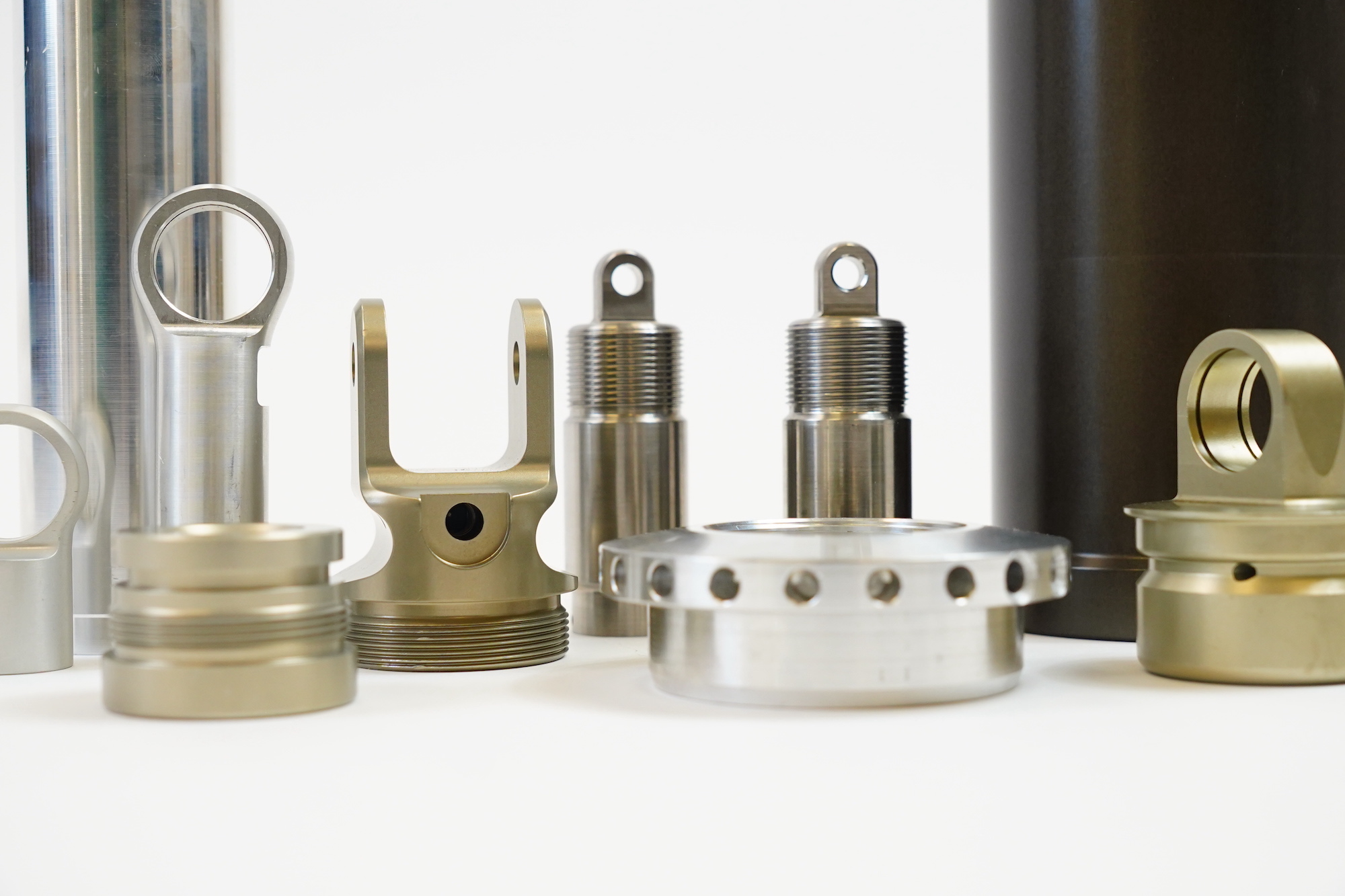
Bronze Alloy Selection Guide
The right bronze alloy depends on the load, speed, temperature, and operating environment of your application:
- C93200 (932 bearing bronze, SAE 660) — A widely used bearing bronze with an excellent combination of load capacity, embeddability, and conformability. Commonly used for plain bearings and bushings in moderate-speed and moderate-load applications.
- C95400 (954 aluminum bronze) — A high-strength aluminum bronze with excellent corrosion resistance, including resistance to seawater environments. Used for high-load bushings, gear blanks, and marine hardware.
- C54400 (544 phosphor bronze) — A spring-quality phosphor bronze with high fatigue resistance, commonly used for electrical spring contacts and precision springs.
- C83600 (85-5-5-5 red brass) — A copper-rich alloy with good corrosion resistance, commonly used for plumbing fittings and moderate-pressure valve bodies.
Specifications
| Primary Grade | C14500 (tellurium copper) for machined parts with excellent machinability; C11000 for maximum electrical conductivity |
| Primary Alloys | C93200 (932 bearing bronze), C95400 (954 aluminum bronze), and C54400 (phosphor bronze) |
| Turning | Bar-fed and chucked turning; Swiss CNC machining for small bronze bushings and precision components |
| Milling | Vertical and horizontal CNC milling for bronze gear blanks, housings, and marine hardware |
| Hardness | C93200: Brinell 60–75; C95400: Brinell 150–180, providing significantly greater hardness than bearing bronze |
| Tolerances | ±0.001″ standard; bearing bore tolerances to ±0.0005″ for precision bearing fits |
| Volume | 10 pieces through high-volume production |
| Certifications | ISO 9001:2015 |
Bronze Applications From RPM
With Bronze CNC Machining, Resolute Precision Manufacturing produces precision bronze components for bearing, wear, fluid-control, and marine applications, including:
- Plain bearings and bushings — C93200 bearing bronze bushings for rotating and oscillating shaft applications
- Thrust washers and wear plates — C93200 and C95400 components designed for axial-load applications
- Gear blanks — C95400 aluminum bronze gear blanks for high-load gear applications
- Marine hardware — C95400 aluminum bronze and naval bronze components for marine hardware and through-hull applications
- Valve seats and stems — C93200 and C95400 bronze components for fluid-control applications
- Pump wear rings — C93200 bearing bronze wear rings for centrifugal and gear pump applications
Industries We Serve
Aerospace & Defense
Medical Devices
Automotive

Fluid Power
Frequently Asked Questions
Q: What is the load capacity difference between C93200 and C95400 bronze?
A: C14500 (tellurium copper) is the recommended grade for CNC machined electrical contacts. The 0.5% tellurium addition dramatically improves machinability compared to C10100 or C11000 while retaining over 93% IACS conductivity — sufficient for the vast majority of electrical contact applications.
Q: What is the corrosion resistance of aluminum bronze in seawater?
A: C95400 aluminum bronze provides excellent resistance to seawater corrosion — superior to most brasses and comparable to 316 stainless for many marine applications. The aluminum addition creates a protective aluminum oxide film on the surface. C95400 is preferred for marine propeller hubs, rudder hardware, and submerged pump components.
Q: Can RPM machine oil-impregnated (Oilite) bronze bushings?
A: Oilite (sintered bronze) bushings are manufactured by sintering — not by machining. We machine solid C93200 and C95400 bronze to produce bushings with equivalent or superior dimensional accuracy. For applications where oil impregnation is specifically required, we recommend consulting a sintered bronze bushing manufacturer.
Q: Is bronze compatible with galvanic protection systems?
A: Bronze alloys are cathodic (noble) relative to aluminum and steel in the galvanic series. In a marine environment, bronze hardware can cause galvanic corrosion of less noble metals in contact with it. Proper isolation or appropriate material selection for the complete assembly is required.