
CNC Swiss Machining
Resolute Precision Manufacturing operates six Swiss CNC machines in 20mm, 32mm, and 38mm sizes, producing highly complex small-diameter components for medical device, fluid power, aerospace, automotive, and fastener manufacturers. Our Swiss CNC machining capabilities allow us to produce Swiss machined parts with threading, grooving, cross-drilling, and milling completed in a single uninterrupted cycle. For manufacturers seeking reliable Swiss machining services, we provide finished components directly to you with no distributor markup. Request a QuoteWhat Makes Swiss CNC Machining Different?
Guide Bushing Support: Uses a guide bushing directly at the cutting zone to support the workpiece and prevent bending on long, slender, and small-diameter Swiss machined parts.
All-in-One Processing: Combines multiple operations like OD turning, ID boring, threading, grooving, cross-drilling, and live milling into a single uninterrupted program.
Maximum Repeatability: Eliminates secondary operations and re-fixturing to minimize setup-related variations between features.
Ready-to-Ship Precision: Delivers high-precision, completely finished components designed for manufacturers needing efficiency across complex, small-diameter components.
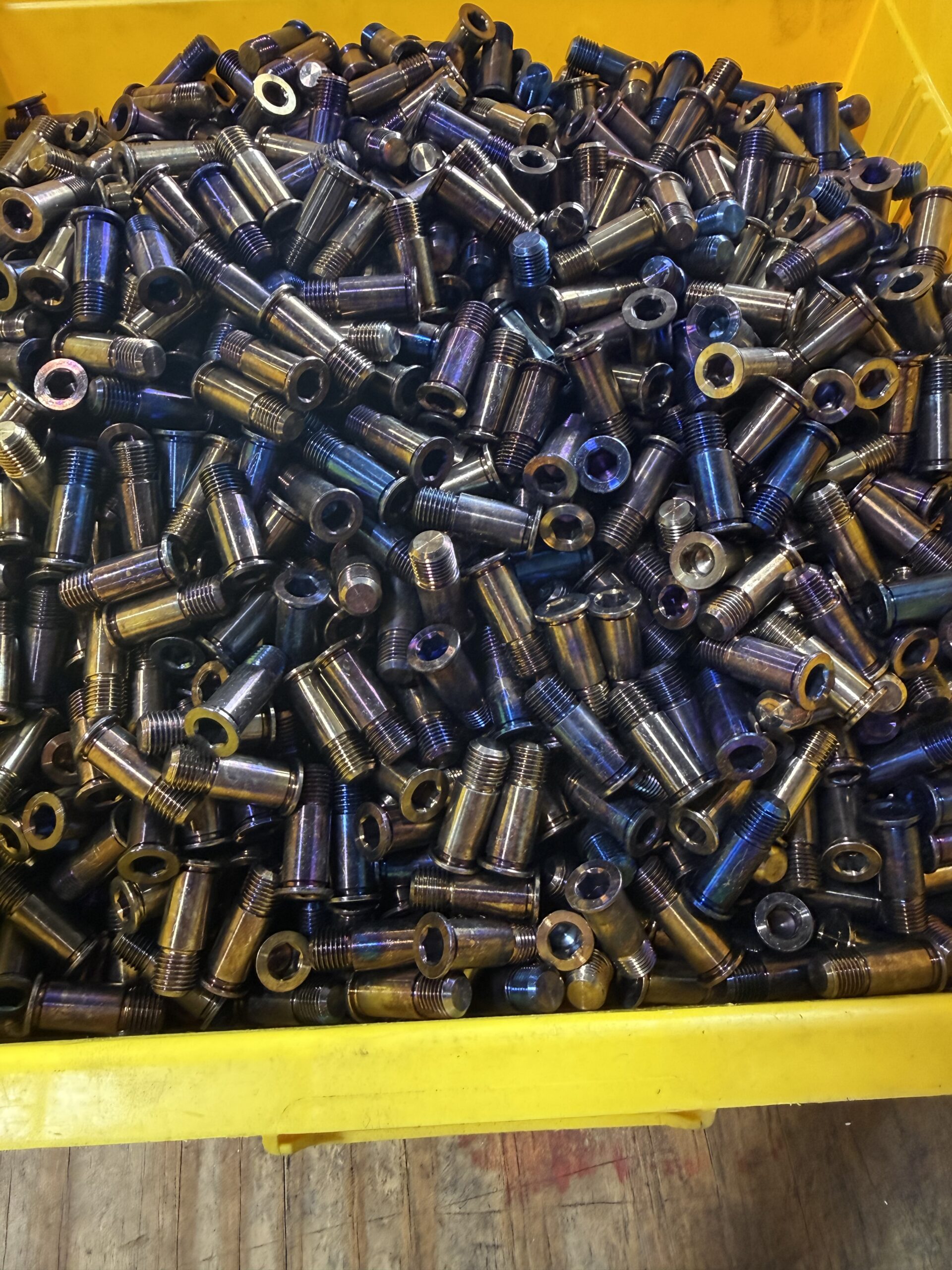
Swiss Machining vs. Screw Machining and Conventional Turning
You may hear this process called Swiss-type machining, Swiss turning, or Swiss screw machining. They all describe the same idea: the bar stock is fed through a guide bushing while the cutting tools stay close to it, so the cut always happens right where the material is supported.
Compared with a conventional lathe or a traditional screw machine, a CNC Swiss machine gives you:
- Better accuracy on slender parts: support at the cut means less flex and less taper.
- More axes and tools: main and back-side tooling work on the part at once, so more features are finished in a single cycle.
- Fewer secondary operations: threads, cross holes, flats, and slots are completed on the machine instead of moving the part elsewhere.
- Efficient production: from a single prototype to runs of hundreds of thousands of parts.
Our Swiss CNC Machine Sizes
We operate Swiss CNC machines in three capacity classes, matching machine size to part requirements for optimal efficiency and precision. Every CNC Swiss lathe machine in our shop is fitted with full live tooling, so complex features are finished in one cycle.
- 20mm Swiss CNC:
Fine small-diameter components such as pins, micro-fasteners, and miniature valve components - 32mm Swiss CNC:
Mid-range production for fittings, fasteners, valve spools, and other precision components - 38mm Swiss CNC:
Largest Swiss capacity for more substantial cross-sections while maintaining the precision advantages of Swiss machining
Specifications
| Machine Sizes | 20mm, 32mm, and 38mm Swiss CNC machines |
| Bar Stock Capacity | Up to 1-5/8″ (38mm) diameter |
| Live Tooling | Full driven tool capability — cross-holes, flats, milled features, threading |
| Operations | OD turning, ID boring, threading, grooving, cross-drilling, live milling in one cycle |
| Metals | Stainless (303/304/316/17-4PH), aluminum (6061/7075), brass (360), titanium (Grade 5), alloy steel (4140/4340), carbon steel (12L14), copper |
| Plastics | Delrin, PEEK, nylon, polycarbonate, PTFE |
| Volume | 1 prototype to 500,000+ parts per year |
| Certifications | ISO 9001:2015 |
Typical Swiss Machined Parts
- Medical devices: Implant screws, instrument components, cannulas, surgical fasteners
- Fluid power: Valve spools, metering pins, poppets, hydraulic fittings
- Aerospace and defense: Lightweight aluminum and titanium structural fasteners
- Automotive: Injector components, sensor housings, threaded inserts
- Electronics: Connector pins, contact bodies, precision housings
- Custom fasteners: Specialty screws, socket head cap screws, precision bolts
Advantages of Swiss CNC Machining
- Tight tolerances on small, long, and delicate parts
- Complex parts on one machine, with turning, drilling, threading, and milling in one cycle
- Smooth surface finishes thanks to a stable, supported cut
- Shorter lead times because fewer setups and operations are needed
- Cost-effective at every volume, from prototypes to high-volume production
- High detail for intricate features on small-diameter parts
Why Choose Us For CNC Swiss Machine Services
- Six Swiss machines in three sizes, so each job runs on the right one
- ISO 9001:2015 certification for a documented, repeatable quality process
- Direct supply: finished components come straight from us, with no distributor markup
- Prototype to production: from one part to 500,000+ per year with the same team
- Material range: metals and plastics, from stainless and titanium to PEEK and PTFE
- Value-added services: heat treating, coatings, assembly, and inventory management available alongside machining
Frequently Asked Questions
What is the bar stock diameter range for RPM's Swiss CNC machines?
Our Swiss machines handle bar stock from approximately 1mm to 38mm diameter. For parts larger than 38mm, our conventional CNC lathes with live tooling provide comparable complexity capability.
How does Swiss machining compare to conventional CNC turning for small parts?
On a conventional lathe, the part is held at one end and can deflect as the tool cuts, especially when it is long and thin. A Swiss machine supports the bar right at the cutting zone with a guide bushing, so slender parts hold tighter tolerances. Swiss machines also carry more tools and axes, so features like cross holes, threads, and milled flats are finished in one cycle, which reduces secondary operations and lead time.
Does RPM produce Swiss-machined prototypes?
Yes. We run quantities from a single prototype up to 500,000+ parts per year, so you can validate your design and move to production with the same supplier.
Do you sell Swiss CNC machines?
No. We are a contract manufacturer. We machine Swiss parts for you on our own equipment and ship finished components directly to you.