
Alloy Steel CNC Machining Services
Resolute Precision Manufacturing (RPM) provides alloy steel CNC machining for industrial, defense, aerospace, and energy customers who need strength, fatigue resistance, and tight tolerances in the same part. Our alloy steel machining services cover 4140, 4340, 8620, and 4130, and our special alloy CNC machining capability extends to tool steels and other grades on request. With bar-fed lathes, Swiss CNC machines, and multi-axis vertical machining centers, we deliver alloy steel precision machined parts that arrive finished, with heat treating, grinding, and finishing coordinated for you. Request a QuoteWhy Choose Alloy Steel for High-Strength Applications
Plain carbon steels like 1045 lose hardenability in thicker sections. Alloy steels add chromium, molybdenum, nickel, and vanadium so parts harden evenly from surface to core. Most of our alloy steel machined parts are 4140 (95 to 180 KSI after heat treatment) or 4340 (125 to 220 KSI), which suits heavier sections and severe cyclic loading. For strong corrosion resistance, we also run stainless steel CNC machining in 303, 304, and 17-4 PH.
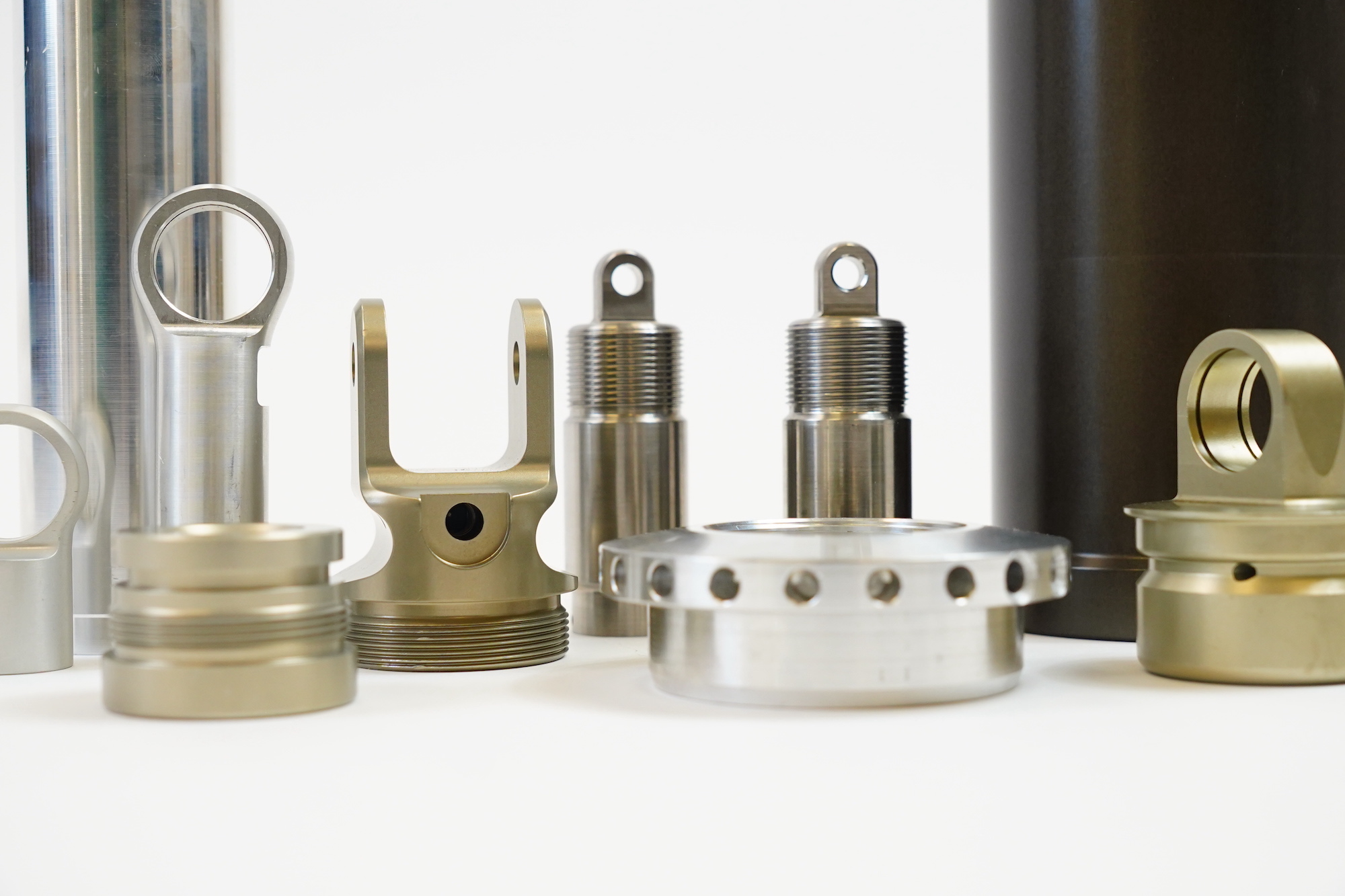
Our Alloy Steel Machining Services
Every project begins with a review of your drawing, volume, and performance requirements. Our alloy steel machining process typically includes:
- Material selection support: matching grade, section size, and strength target to your application.
- CNC turning and milling: completing complex geometry in as few setups as possible.
- Heat treatment coordination: quench and temper, carburizing, or nitriding through qualified outside providers.
- Post-heat-treat grinding: OD and surface grinding to hold final dimensions.
- Inspection and documentation: dimensional verification and material traceability to match your quality requirements.
We handle both prototypes and production runs of alloy steel machined parts, and we also offer alloy steel customized machining for parts with unusual geometry, special tolerances, or application-specific requirements. Our alloy steel customized machining work often involves custom features, specialty grades, and low-volume runs where engineering input early in the design makes the difference.
Alloy Steel Grade Selection
The right grade depends on section size, required strength, machinability, and heat treatment.
- 4140 (Cr-Mo steel): a widely used alloy with an excellent balance of strength, toughness, and machinability. Common in shafts, gears, hydraulic cylinder components, and structural fasteners.
- 4340 (Ni-Cr-Mo steel): high hardenability and strength for larger cross sections that need consistent properties throughout the part.
- 8620 (Ni-Cr-Mo case-hardening steel): designed for carburizing, giving a tough, ductile core and a hard, wear-resistant surface. Common in gears, camshafts, and wear components.
- 4130 (Cr-Mo steel, lower carbon): similar to 4140 but with lower carbon for better weldability. Often used in aerospace structures where both strength and weldability matter.
- Tool and specialty steels (52100, H13, D2): available on request as part of our special alloy CNC machining offering.
Specifications
| Grades | 4140, 4340, 8620, and 4130; standard stocked grades with 52100, H13, D2, and other alloys available upon request |
| Turning | Bar-fed and chucked turning for alloy steel shafts, fasteners, and cylindrical components |
| Milling | Vertical and horizontal CNC milling for alloy steel housings, brackets, and precision components |
| Heat Treatment | Quench and temper (Q&T) for 4140 and 4340; carburizing and case hardening for 8620; nitriding coordinated through qualified outside heat treatment providers |
| Grinding | OD and surface grinding after heat treatment to achieve final dimensions; coordinated through qualified outside grinding providers |
| Tensile Strength | 4140 Q&T: 95–180 KSI; 4340 Q&T: 125–220 KSI, depending on the specified tempering temperature |
| Tolerances | ±0.001″ standard machining; post-heat-treatment grinding achieves ±0.0001″ on OD features |
| Certifications | ISO 9001:2015 |
Alloy Steel CNC Machined Parts and Applications
Resolute Precision Manufacturing supports high-load, high-fatigue work across defense, automotive, energy, and heavy equipment. Typical alloy steel CNC machined parts include:
- Drivetrain and powertrain shafts: precision-turned 4140 and 4340 shafts heat treated to 35–42 Rc for continuous torsional loads in industrial gearboxes.
- Hydraulic cylinder rods: quenched and tempered 4140 rods, turned and centerless ground to tight OD tolerances for reliable seal seating.
- Aerospace and defense hardware: 4340 structural fittings and landing gear components machined to flight-critical specifications.
- Industrial gears and splines: carburized 8620 blanks and splined shafts built for contact fatigue and shock loading.
- Structural fasteners: high-tensile 4140 bolts, studs, and heavy hex hardware for extreme clamping loads.
- Tooling and die inserts: tough H13 and wear-resistant D2 machined into mold cavities, stamping dies, and forming punches.
Tips for Designing Alloy Steel Parts
Resolute Precision Manufacturing supports high-load, high-fatigue work across defense, automotive, energy, and heavy equipment. Typical alloy steel CNC machined parts include:
- Machine before hardening when you can. Rough and semi-finish in the annealed or pre-hardened state, heat treat, then grind only the critical features.
- Allow for heat treat movement. Leave grinding stock on features that must hold tight tolerances after quench and temper.
- Avoid sharp internal corners. Generous radii reduce stress concentration and lower the risk of cracking during heat treatment.
- Specify hardness or tensile strength, not just the grade. The tempering temperature, not the alloy alone, sets the final properties.
- Call out critical surfaces on the drawing. This helps us plan grinding, finishing, and inspection from the start.
Industries We Serve
Aerospace & Defense
Medical Devices
Automotive

Fluid Power
Frequently Asked Questions
Should I specify 4140 or 4340 for a high-strength shaft?
For shaft diameters up to 2 inches, 4140 provides adequate hardenability for most strength requirements at a lower material cost than 4340. For larger diameters, or for tensile strength above 180 KSI, 4340’s superior hardness is needed to achieve full hardness throughout the cross section.
Can RPM supply 4140 pre-hardened to Rc 28–32?
Yes. Pre-hardened 4140 in the Rc 28–32 range is a common option when a part needs moderate strength without a separate heat treat cycle. It reduces lead time and distortion risk, though parts needing higher hardness will still require quench and temper after rough machining.
What documentation does RPM provide for alloy steel heat treated parts?
We provide material certifications and traceability for the stock used, along with heat treatment certifications from our qualified processing partners and dimensional inspection reports as required by your drawing or purchase order. Tell us your documentation requirements when you request a quote.
What is the machinability of 4140 compared to 1045 carbon steel?
In the annealed condition, 4140 machines are about as readily as 1045, and the two are generally comparable in tooling and speeds. Machining becomes noticeably harder as 4140 is hardened, which is why we machine as much as possible before final heat treatment.