
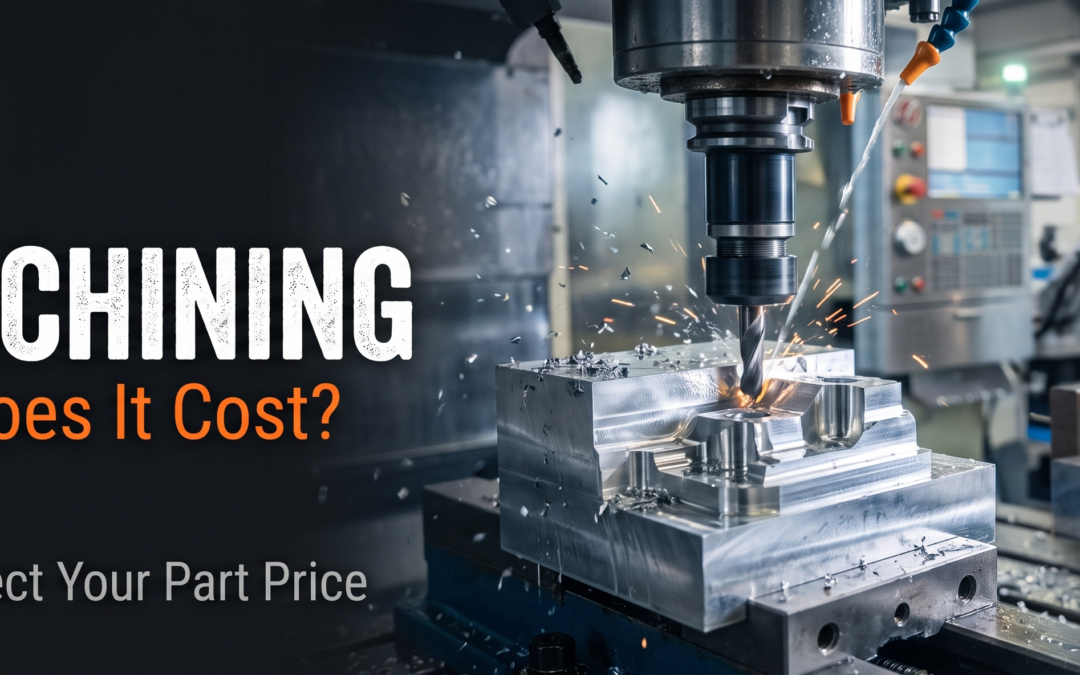
CNC machining cost depends on several factors, including material selection, part complexity, production quantity, machining time, dimensional tolerances, and finishing requirements. Even components made from the same material can have different prices because their manufacturing processes and quality requirements differ.
For OEMs, purchasing managers, and manufacturing teams, understanding these cost factors helps with budget planning, supplier comparisons, and production decisions. In this guide, we explain the seven factors that affect CNC machining prices and how to control costs without compromising part quality.
How Is CNC Machining Cost Calculated?
There is no universal price per part that applies to every project. An accurate quotation requires information about the part’s geometry, material, tolerances, order quantity, and finishing requirements.
7 Factors That Affect CNC Machining Cost
1. Material Selection and Machinability
Material selection affects both raw material expenditure and machining efficiency. Aluminum is often economical to machine because of its favorable machinability, while stainless steel, titanium, and certain alloy steels may require different cutting conditions and tooling strategies.
The best material depends on the component’s strength, corrosion resistance, operating environment, and functional requirements.
How to control material costs:
- Select a material grade that meets the application’s requirements.
- Consider machinability and material availability alongside purchase price.
- Confirm the material specification before requesting a quote.
- Avoid specifying premium materials when a suitable alternative meets the required performance criteria.
2. Part Geometry and Design Complexity
Complex geometries can increase machining time, tooling requirements, workholding complexity, and the number of operations needed. Deep pockets, thin walls, narrow slots, and difficult-to-reach features may require specialized machining strategies or additional setups.
How to control geometry-related costs:
- Simplify non-essential features where practical.
- Use internal corner radii compatible with available cutting tools.
- Avoid unnecessarily thin walls and deep cavities.
- Reduce additional setups where the component’s geometry allows it.
Manufacturing considerations should be reviewed alongside functional requirements to avoid unnecessary complexity without compromising part performance.
3. Order Quantity and Production Volume
Order quantity influences production planning, setup allocation, material purchasing, and manufacturing efficiency. Larger batches can reduce the setup cost allocated to each part and may allow more efficient repeat production.
However, larger orders also require greater upfront material expenditure and may increase inventory costs. The best quantity depends on demand, part complexity, and the production process.
How to control quantity-related costs:
- Share expected initial and recurring demand.
- Compare prototype, small-batch, and production quantities.
- Consider scheduled releases for predictable repeat orders.
- Evaluate total purchasing and inventory costs rather than unit price alone.
Resolute Precision supports production from single-piece prototypes to high-volume requirements, depending on the component and manufacturing process.
4. Machine Selection, Setup, and Machining Time
The manufacturing process affects how efficiently a component can be produced. CNC turning is suited to many rotational parts, while CNC milling is commonly used for pockets, slots, flat surfaces, and other prismatic features. Swiss CNC machining can be appropriate for certain small-diameter, complex components.
Machine selection depends on part geometry, material, dimensions, tolerances, and production quantity. More advanced equipment may have a higher operating rate but can reduce repositioning and combine multiple operations. A simpler process may be more economical for a straightforward part.
Setup, programming, workholding, and tool selection also contribute to production cost.
How to control process-related costs:
- Match the machining process to the component’s geometry.
- Reduce unnecessary setups where practical.
- Provide complete drawings and specifications.
- Discuss repeat-production requirements with the manufacturer.
5. Dimensional Tolerances and Accuracy Requirements
Tolerances define the acceptable variation in a component’s dimensions. Tighter tolerances can increase machining cost because they may require additional finishing passes, more controlled machining conditions, and more detailed inspection.
For example, a critical bearing seat or mating feature may require tighter dimensional control than a non-critical external surface. Applying unnecessarily tight tolerances to every dimension can increase costs without improving functionality.
How to control tolerance-related costs:
- Identify dimensions critical to fit and function.
- Specify practical tolerances for non-critical features.
- Use geometric dimensioning and tolerancing (GD&T) where appropriate.
- Confirm inspection requirements for critical dimensions before production.
The objective is to achieve the required precision without adding unnecessary manufacturing and inspection costs.
6. Surface Finishing and Secondary Operations
Machining may be followed by additional processes such as anodizing, black oxide, zinc plating, heat treating, precision grinding, or other specified operations.
These requirements add processing costs and may affect delivery schedules. Surface roughness specifications can also influence machining time because finer finishes may require additional passes or specialized finishing methods.
How to control finishing costs:
- Specify the required finish or coating clearly.
- Identify which surfaces require special treatment.
- Avoid unnecessary cosmetic finishing.
- Include all secondary operations in the original quotation request.
Resolute Precision coordinates several value-added processes, including coatings, heat treating, EDM, and precision grinding, through its manufacturing and supplier network.
7. Inspection, Quality Documentation, and Traceability
Inspection requirements influence the time and resources needed to verify that a component meets its specifications. Some parts require standard dimensional checks, while others may need detailed inspection reports, material certifications, or production-lot traceability.
These requirements depend on the customer’s drawings, purchase order, application, and applicable quality standards.
How to control quality-related costs:
- Identify critical dimensions and acceptance criteria.
- Specify required material certifications and inspection reports.
- Confirm traceability requirements before production.
- Request documentation appropriate to the application and customer requirements.
Clearly defined quality expectations help manufacturers prepare accurate quotations and reduce delays caused by missing information.
How Can You Reduce CNC Machining Cost Without Compromising Quality?
Cost optimization starts with aligning the component’s specifications with its actual functional requirements. Consider these practical steps:
- Choose materials carefully: Balance performance, machinability, and availability.
- Simplify non-critical features: Reduce unnecessary machining complexity.
- Specify functional tolerances: Apply tight tolerances only where required.
- Plan production quantities: Evaluate unit pricing alongside demand and inventory costs.
- Select the appropriate machining process: Match turning, milling, or Swiss machining to the part.
- Define finishing requirements early: Include coatings and secondary operations in the original quote.
- Provide complete specifications: Reduce clarification and avoidable rework.
When comparing suppliers, ensure their quotes cover the same material, quantity, tolerances, finishing, inspection, and delivery requirements. A lower initial price may not represent the lowest total cost if essential operations are excluded.
What Information Do You Need for an Accurate CNC Machining Quote?
To evaluate a project accurately, a manufacturer needs sufficient information about the component and its production requirements.
Prepare the following details when requesting a quote:
- Technical drawing: Dimensions, tolerances, and relevant GD&T.
- CAD model: A 3D model where available.
- Material specification: Required material grade and certification needs.
- Order quantity: Initial quantity and expected repeat demand.
- Finishing requirements: Surface roughness, coatings, or heat treatment.
- Quality requirements: Inspection reports and traceability documentation, where applicable.
- Delivery expectations: Required delivery date and production schedule.
Providing complete information helps the manufacturer assess the component and prepare a quotation based on its actual specifications.
Get a CNC Machining Quote from Resolute Precision
Choosing a CNC machining supplier involves more than comparing unit prices. Manufacturing capabilities, production consistency, material requirements, and quality expectations also affect the overall value of a supplier relationship.
Resolute Precision Manufacturing provides CNC turning, Swiss CNC machining, milling, custom-machined components, and value-added manufacturing services for industrial and OEM applications.
Whether you need a prototype or recurring production quantities, sharing your technical drawings and specifications allows the team to evaluate your requirements and provide project-specific pricing.
Ready to discuss your next machining project?
Request a CNC Machining Quote from Resolute Precision to discuss your component specifications, production quantity, and manufacturing requirements.
Frequently Asked Questions
How much does CNC machining cost per part?
CNC machining cost varies according to material, geometry, machining time, order quantity, tolerances, finishing, and inspection requirements. An accurate price requires reviewing the component’s specifications and production needs.
Does CNC machining cost less for larger orders?
Larger orders can reduce the setup cost allocated to each part and may improve production efficiency. However, the actual savings depend on the component, manufacturing process, material costs, and order quantity.
Do tighter tolerances increase CNC machining costs?
They can. Tighter tolerances may require additional machining passes, more controlled production conditions, and detailed inspection. Specifying tolerances according to functional requirements helps manage cost while maintaining quality.
What information is needed for a CNC machining quote?
Provide a dimensioned drawing, CAD model where available, material specification, order quantity, tolerances, finishing requirements, inspection documentation needs, and delivery expectations. These details help the manufacturer evaluate the project accurately.
Can one supplier coordinate machining and finishing?
Yes, depending on the supplier’s capabilities and network. Resolute Precision offers CNC machining and coordinates selected value-added processes, including coatings, heat treating, EDM, and precision grinding, helping customers manage multiple manufacturing requirements through one supplier relationship.